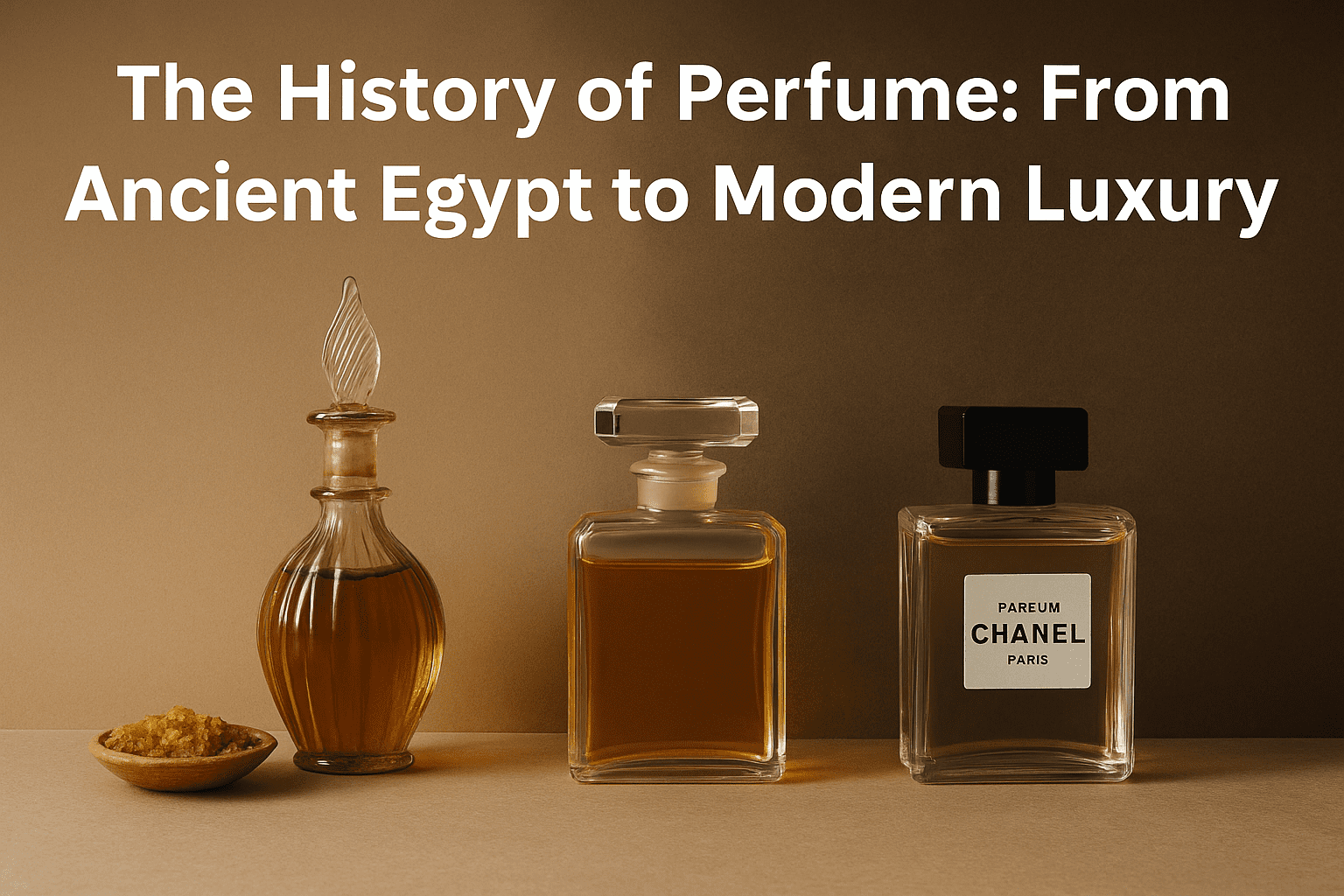
The History of Perfume: From Ancient Egypt to Modern Luxury
Perfume has always been more than a pleasant scent. Across cultures and centuries, it has symbolized power, spirituality, love, and identity. The history of perfume is as rich as the fragrances themselves, spanning thousands of years from ancient rituals to today’s luxury designer bottles.
In this article, we’ll explore the fascinating journey of perfume, from its earliest uses in ancient civilizations to its evolution into a global industry worth billions.
Perfume in Ancient Civilizations
Egypt – The Birthplace of Perfume
The earliest recorded use of perfume dates back more than 4,000 years to ancient Egypt. Egyptians believed fragrance connected the physical and spiritual worlds. Perfumes were used in temples to honor the gods, in embalming rituals, and as symbols of wealth.
- Ingredients: Myrrh, frankincense, lotus, and cinnamon.
- Application: Oils and balms rubbed on the skin, not sprays.
- Famous user: Queen Cleopatra was said to have seduced both Julius Caesar and Mark Antony with her custom perfume blends.
Mesopotamia and Persia – Early Innovation
Perfume production also thrived in Mesopotamia. The chemist Tapputi, considered the world’s first recorded perfumer (1200 BCE), created formulas by distilling flowers, oils, and resins.
In Persia, rulers viewed fragrance as a status symbol, and the art of distillation advanced significantly, influencing later Arab and European practices.
Perfume in Ancient Greece and Rome
Greece – Perfume as Philosophy and Medicine
The Greeks expanded perfume use for personal grooming, athletics, and healing. Famous philosophers like Hippocrates believed fragrances had therapeutic powers.
- Scents were tied to the gods — rose for Aphrodite, mint for Dionysus.
- Perfume was seen as both sensual and sacred.
Rome – Perfume for All
The Romans made perfume mainstream, importing large quantities from Egypt and Arabia. They used it to scent baths, clothing, homes, and even animals.
- Historian Pliny the Elder claimed Rome consumed “2,800 tons of imported frankincense” each year.
- Perfume became a mark of luxury and indulgence among the elite.
Perfume in the Middle Ages
As the Roman Empire declined, Europe’s perfume industry waned. But in the Islamic Golden Age, perfumery flourished.
Arab Contributions – Science Meets Fragrance
- Avicenna (Ibn Sina) perfected steam distillation, allowing for the creation of pure essential oils.
- Rose water became one of the most valuable exports of the Middle East.
- Perfumes were used for hygiene, medicine, and trade.
When Crusaders returned from the Middle East, they brought new fragrance knowledge back to Europe, setting the stage for the Renaissance.
Perfume in the Renaissance and Enlightenment
Perfume exploded in popularity during the Renaissance, particularly in Italy and France. Nobility used perfumes to mask odors in an era when bathing was rare.
- Catherine de’ Medici (16th century) made perfume fashionable in the French court.
- Gloves scented with lavender or musk became symbols of aristocracy.
- Venice emerged as a key perfume trading hub.
By the 17th century, France became the epicenter of perfume, with Grasse developing as the capital of fragrance production — a title it still holds today.
Perfume in the 19th Century – The Rise of Modern Perfumery
The 19th century was transformative thanks to chemistry. Synthetic ingredients like coumarin and vanillin allowed perfumers to create entirely new scents.
- This was the era of classic French houses like Guerlain (1828).
- Perfume became more accessible to the middle class, not just royalty.
- Bottles were designed by luxury glassmakers like Baccarat and Lalique, turning perfumes into art.
Perfume in the 20th Century – Global Expansion
The 20th century marked the birth of perfume as mass luxury. Iconic scents shaped culture, fashion, and identity.
- 1921: Chanel No. 5 launched, revolutionizing modern perfumery with aldehydes.
- Dior, Yves Saint Laurent, and Givenchy followed, tying fashion and fragrance.
- Celebrities began endorsing perfumes, starting a trend that continues today.
Perfume was no longer just for elites — it became a way for everyone to access luxury.
Perfume Today – Billions in Bottles
In the 21st century, perfume is a multi-billion-dollar industry. Designer houses dominate, but niche brands are gaining popularity. Trends now include:
- Unisex perfumes – Genderless scents appeal to modern consumers.
- Niche fragrances – Unique, artisanal scents for connoisseurs.
- Sustainability – Eco-friendly packaging and natural sourcing.
- Celebrity & influencer fragrances – Social media drives mass sales.
Perfume remains what it has always been: a statement of identity, culture, and beauty.
Why Authentic Perfume Matters
The history of perfume shows its timeless importance. From Cleopatra’s oils to Chanel No. 5, fragrance has always symbolized status, love, and individuality. But in today’s market, counterfeit perfumes are common.
At PerfumesLA, every fragrance is 100% authentic and factory-sealed, ensuring that when you buy a designer scent, you’re experiencing the same luxury that has evolved through history.
? Explore our Perfume Collections and write your own chapter in the history of fragrance.